How to Rebuild Your Margins After China Tariffs
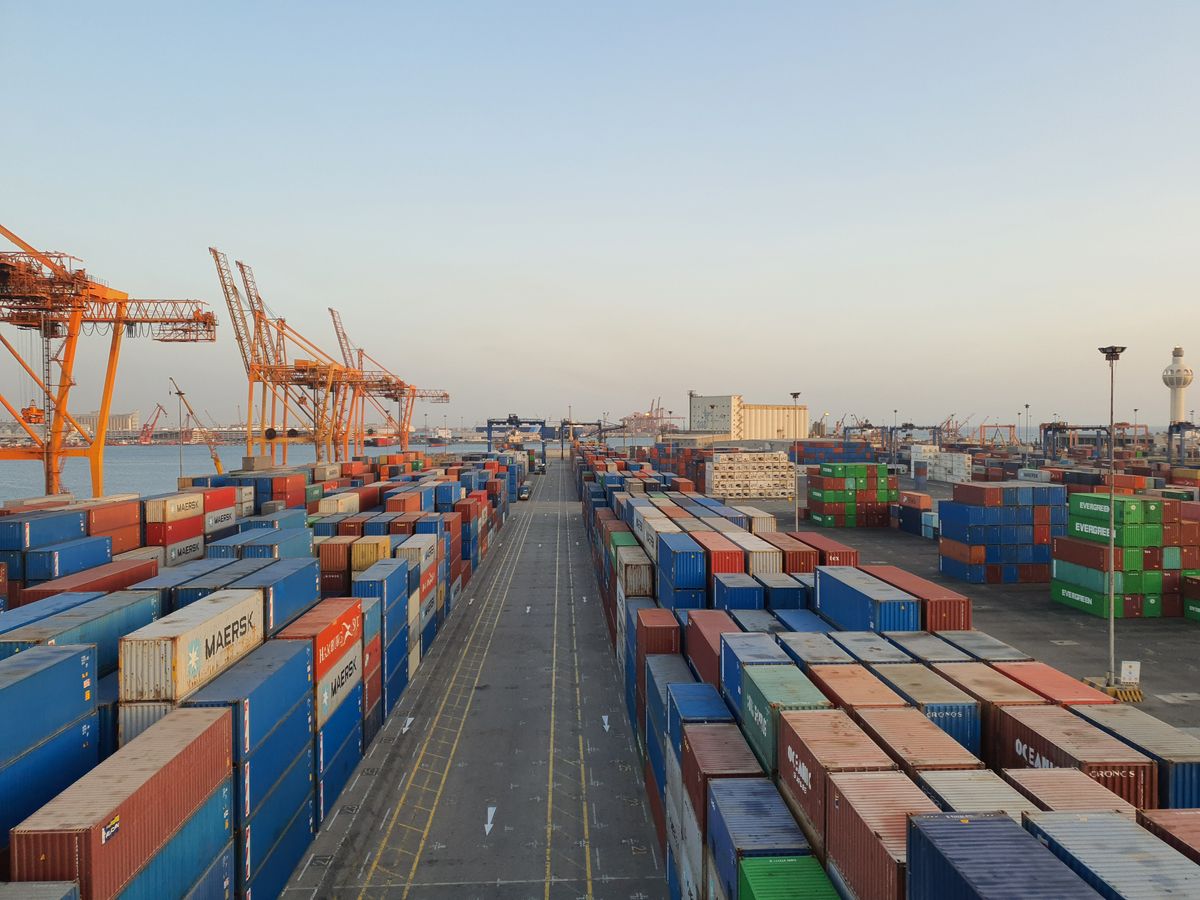
Thousands of Amazon sellers built their business on two protections that no longer exist.
The first was the de minimis exemption. Packages under $800 entered the US duty-free. No customs clearance. No MPF. No duty. Direct to consumer from overseas warehouses at near-zero import cost.
The second was low China tariff rates. Before the escalation cycle, most consumer goods from China carried manageable duty rates that fit inside a healthy margin model.
Both are gone. Sellers who relied on either one took a hit. Sellers who relied on both took a compounding hit that showed up as collapsed margins, lost rankings from emergency repricing, and revenue dropping month over month with no clear path back.
The sellers who recover are not the ones waiting for policy to reverse. They are the ones rebuilding their cost structure around current reality.
This is the framework.
Start With the Real Landed Cost – Not What You Think It Is
The first mistake most sellers make after a tariff increase is repricing based on an estimated landed cost rather than a calculated one. If your margin model is wrong the repricing decision is wrong regardless of how well you execute it.
Landed cost for a China-sourced product in 2026 is not the supplier invoice price plus shipping. It is the full stack:
Product cost (FOB or EXW from supplier)
Plus international freight (ocean or air from origin port to US port)
Plus marine insurance
Plus import duty at the correct HTS code rate
Plus all applicable additional tariff programs stacked on top of the base duty
Plus Merchandise Processing Fee (0.3464 percent of CIF value, minimum applies)
Plus customs broker fees
Plus inland freight from port to warehouse or Amazon FBA
Plus FBA inbound placement fee
Plus FBA fulfillment fee, fuel surcharge, and storage
Most sellers modeling their margins after a tariff change update the duty line and nothing else. The de minimis elimination added MPF to shipments that previously had none. The tariff increases changed the duty line. FBA fee increases changed the fulfillment line. All three changed at approximately the same time. A margin model that only updates the duty line underestimates the true cost increase by a meaningful amount.
For the complete landed cost formula including how duty stacks on CIF value not FOB, see How to Calculate Landed Cost.
Verify Your HTS Code Before You Model Anything
This is the step most sellers skip entirely and the one that most often produces a wrong landed cost.
The tariff rate applied to your product depends on its HTS code. Different codes carry different base duty rates. Different codes are subject to different Section 301 tariff lists. A product classified under the wrong HTS code may be modeled at a 7.5 percent Section 301 rate when the correct code carries a 25 percent rate. Or vice versa. Either way the margin model is wrong.
The tariff stack on China-origin goods in 2026 includes multiple layers:
The base MFN duty rate from the HTS schedule.
Section 301 tariffs specific to China that stack on top of the MFN rate.
Any additional tariff programs applicable to the specific product category.
Each layer is tied to the specific HTS code. A wrong code produces the wrong stack.
Before modeling any repricing decision, verify your HTS code independently using the USITC database at hts.usitc.gov. Do not use the code your Chinese supplier provided without verification. Suppliers classify for Chinese export schedules, not US import HTS codes. The 10-digit codes diverge at the 7th digit. Check the code yourself and confirm the full tariff stack that applies to your specific product.
The HS Duty Estimator calculates estimated duty on your HTS code and shipment value so you can verify the duty component of your landed cost before making any pricing or sourcing decision. For the complete HTS lookup walkthrough, see HS Code Finder Guide.
The De Minimis Compounding Effect
Many sellers who relied on China sourcing had two cost protections simultaneously: low tariff rates and de minimis exemption. Both are gone.
The de minimis exemption allowed packages valued at $800 or less to enter the US duty-free. For sellers shipping direct to consumer from China warehouses, this meant no duty, no MPF, and no customs clearance cost on every individual order. Combined with low pre-escalation tariff rates, the effective import cost per unit was near zero.
The de minimis exemption was eliminated for China on May 2, 2025. It was extended to all countries on August 29, 2025. Every package now faces duty and MPF regardless of value.
For sellers who relied on both protections, the cost impact is the sum of two separate losses not just one. The duty that did not apply now applies. The MPF that did not apply now applies. The customs clearance cost that did not exist now exists. All three are new recurring costs on every unit.
Sellers modeling their cost increase as only the tariff change are undercounting the true impact if they also relied on de minimis for their fulfillment model. Recalculate landed cost assuming full formal entry with MPF and broker fees on every shipment, not just the tariff line.
For the full explanation of the de minimis elimination and what it means for import costs, see Section 321 De Minimis.

The Margin Rebuild Sequence – Five Levers in Order
The order matters. Each lever funds or enables the next. Running them out of sequence wastes effort and margin.
Lever 1: Eliminate advertising waste first.
Before touching prices or sourcing, cut PPC spend on keywords and campaigns producing clicks without conversions. This is the fastest margin recovery with the least competitive risk. Cutting unprofitable ad spend reduces TACoS immediately without any price change that could affect rank or Buy Box.
Lever 2: Test gradual price increases on low-sensitivity SKUs.
Do not reprice everything at once. A sudden price increase across your catalog destroys BSR rankings and Buy Box position simultaneously. Instead identify your three to five products with the least price-sensitive demand, typically products with low direct competition or strong brand differentiation. Raise those by 5 to 8 percent. Monitor conversion rate and BSR for 30 days. If conversion holds, extend the increase to the next tier of SKUs.
Lever 3: Negotiate COGS reduction with your supplier.
Approach the supplier with your unit economics laid out. Show the specific tariff stack impact on your landed cost. Ask for a cost concession, a freight offset, or extended payment terms. Suppliers who rely on your order volume have genuine incentive to participate in a solution. Go in with a volume commitment in exchange for the concession. That framing produces better results than a margin complaint.
Lever 4: Move high-tariff SKUs to FBM via 3PL.
FBA fees on tariff-hit products compound the margin problem. A product with a $2.50 per unit tariff increase sitting in large standard FBA paying $5.89 per unit in fulfillment fees plus $0.21 fuel surcharge has two cost increases stacking simultaneously. Moving the same product to FBM via a 3PL that ships via USPS Ground Advantage removes the FBA fulfillment fee, the fuel surcharge, the storage fee, and the inbound placement fee from the cost stack. If the 3PL outbound shipping cost is lower than the combined FBA fee stack, FBM recovers 5 to 15 margin points on those SKUs.
Use the FBA Fee Calculator to compare FBA total cost versus FBM outbound shipping cost on your tariff-hit SKUs before making the fulfillment switch.
Lever 5: Diversify sourcing away from China on the worst-margin SKUs.
Sourcing diversification is the hardest lever and the slowest to implement. It is also the most durable fix. Vietnam, India, and Mexico all carry lower effective tariff rates than China on most product categories under current trade policy. Products manufactured in Mexico may qualify for USMCA treatment which eliminates the MPF on top of the lower base duty rate.
For any SKU where the margin cannot be restored through Levers 1 to 4, sourcing diversification is the path. Start with your worst-margin SKUs, not your entire catalog. Find one alternative supplier in a lower-tariff country, order a sample run, validate quality, then transition gradually.
SKU Triage – Which Products Survive, Which Do Not
Not every product is worth saving. The sellers who recover fastest from tariff increases are the ones who make clear discontinuation decisions rather than trying to restore margin on every SKU simultaneously.
Run this triage on your full catalog at recalculated landed cost:
Viable: Products where margin stays above 15 percent at current tariff rates even without repricing.
These products need monitoring but no immediate action. The tariff increase is absorbed within existing margin buffer.
Requires action: Products where margin is 8 to 15 percent at current tariff rates.
Apply the five levers in sequence. Gradual price increase first. Supplier negotiation second. FBM evaluation third. If margin cannot be restored above 15 percent through these levers, evaluate sourcing diversification.
Discontinue: Products where margin is below 8 percent at current tariff rates and cannot be restored.
A product below 8 percent margin has no buffer for PPC variance, return spikes, storage fees, or any additional cost increase. Continuing to sell it consumes cash, inventory capacity, and management attention. Liquidate remaining inventory and redirect capital to viable SKUs.
The discontinuation decision is not a failure. It is capital reallocation. The cash recovered from a discontinued SKU funds the sourcing diversification or inventory investment on a product that can actually sustain margins under 2026 cost structures.
Rates verified June 19, 2026. See changelog.
You've read the theory—now see the actual math for your packages. Use our Carrier Savings Engine to identify 'Savings Gaps' in your packaging and discover the cheapest way to ship your products.
Check My Savings →FAQ
Q: How do I calculate my true landed cost after China tariff increases?
A: Landed cost includes product cost plus international freight plus marine insurance plus import duty at your correct HTS code rate plus all applicable tariff programs stacked on top plus MPF plus customs broker fees plus inland freight plus FBA inbound costs. Do not model only the duty change. The de minimis elimination added MPF and broker fees to shipments that previously had none. FBA fee increases changed the fulfillment line. All three changed at approximately the same time. Use the HS Duty Estimator to verify the duty component and How to Calculate Landed Cost for the complete formula.
Q: Should I raise prices immediately after China tariff increases?
A: No. Sudden price increases across your catalog destroy BSR rankings and Buy Box position simultaneously. The correct sequence is: cut advertising waste first (fastest margin recovery with least competitive risk), then test gradual price increases of 5 to 8 percent on low-sensitivity SKUs while monitoring conversion rate and BSR for 30 days, then extend increases to other SKUs if conversion holds. Running all price increases at once is panic repricing. It costs rank that takes months to rebuild.
Q: Can switching to FBM help recover margins after tariff increases?
A: Yes on tariff-hit SKUs where FBA fees compound the margin problem. Moving a product from FBA to FBM via a 3PL removes the FBA fulfillment fee, fuel surcharge, storage fee, and inbound placement fee from the cost stack. If the 3PL outbound shipping cost is lower than the combined FBA fee stack, FBM recovers 5 to 15 margin points on those SKUs. Use the FBA Fee Calculator to compare FBA total cost versus estimated FBM outbound shipping cost before making the switch.
Q: What countries can I source from instead of China to avoid high tariffs?
A: Vietnam, India, and Mexico carry lower effective tariff rates than China on most product categories under current trade policy. Products manufactured in Mexico may qualify for USMCA treatment which eliminates the MPF and reduces the base duty rate further. The correct approach is to start sourcing diversification on your worst-margin SKUs rather than your entire catalog. Find one alternative supplier in a lower-tariff country, order a sample run, validate quality, then transition gradually. Verify the applicable tariff rate for your specific HTS code and country of origin using the USITC database before committing to a sourcing switch.