Amazon AWD Costs & When It Saves FBA Sellers Money
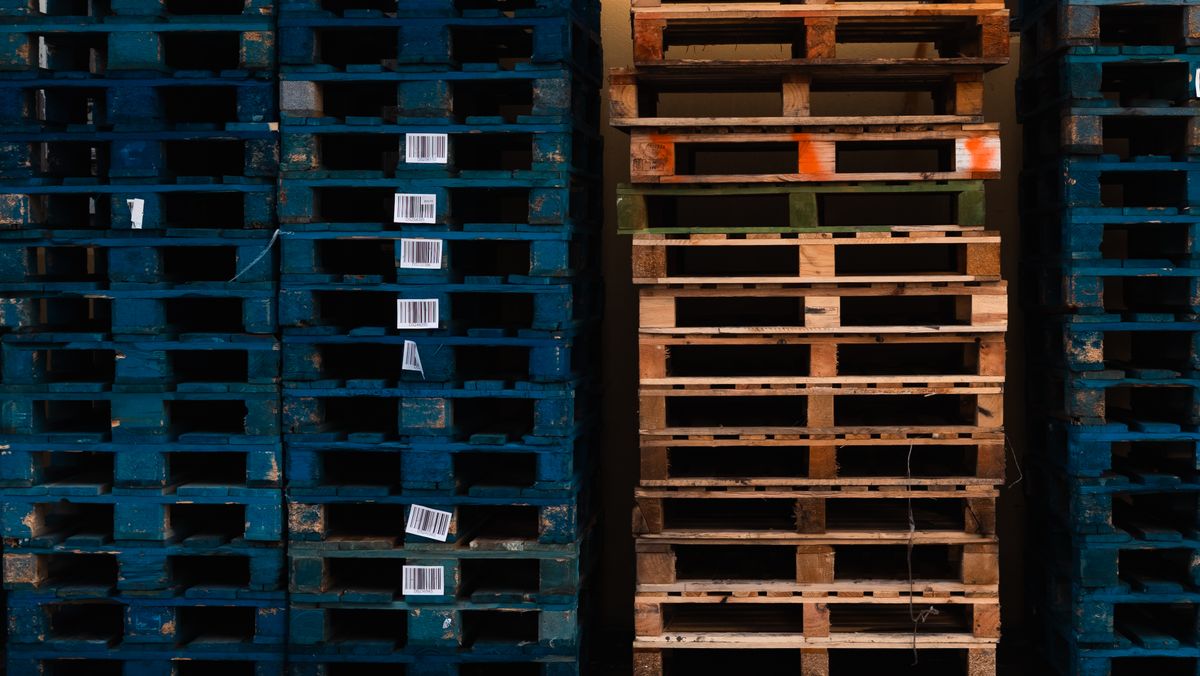
FBA storage fees spike to $2.40 per cubic foot from October through December. A seller holding 200 cubic feet of seasonal inventory in FBA warehouses during Q4 pays $480 per month in storage alone. The same inventory in Amazon Warehousing and Distribution costs $96 to $114 per month regardless of season.
AWD is Amazon’s upstream bulk storage program. It sits between your supplier and FBA. You send pallets to AWD at a lower storage rate. Amazon holds them and automatically replenishes your FBA inventory as units sell. In theory it reduces storage costs, prevents stockouts, and avoids the aged inventory surcharges that begin at 181 days in FBA.
In practice the cost picture is more complicated than the headline storage rate suggests. This guide covers what AWD actually costs in 2026 including all fee components, the scenarios where it produces real savings, and the scenarios where an independent 3PL produces better economics.
What AWD Is and How It Works
Amazon Warehousing and Distribution launched in late 2022 as an invite-only program for select FBA sellers. By 2026 it is available to most Amazon sellers and is part of Amazon’s broader Supply Chain by Amazon suite alongside Amazon Global Logistics and Multi-Channel Fulfillment.
The flow:
Step 1: You ship pallets of inventory from your supplier or prep center to an AWD facility. You arrange and pay for this inbound shipment or use Amazon Global Logistics if shipping from overseas.
Step 2: AWD receives and stores your inventory at a flat monthly storage rate. The inventory is not available for purchase by Amazon customers at this stage. AWD is a storage layer not a fulfillment layer.
Step 3: As your FBA stock depletes, Amazon automatically moves inventory from AWD to FBA fulfillment centers. This transfer takes 3 to 7 days. You do not need to create manual replenishment shipments. The auto-replenishment is the primary operational advantage of AWD over a standard 3PL arrangement.
Step 4: The replenished inventory arrives in FBA and becomes available for purchase.
What AWD is not:
AWD inventory cannot be sold directly to Amazon customers. The product must be in FBA to receive Amazon orders. AWD is the low-cost back room. FBA is the shelf customers buy from.
AWD requires case pack palletized inbound. Individual unit shipments are not accepted. Sellers who ship manufacturer case packs with consistent quantities per carton are the best fit for AWD. Sellers with complex multi-SKU mixed-carton inbound flows face more operational friction.
Since January 1 2026 Amazon ended FBA prep and labeling services in the US. Inventory must arrive at AWD already prepped and FBA-ready. This means FNSKU labeling, polybagging where required, and any other prep must be completed before the shipment reaches AWD. Sellers who previously relied on Amazon to prep inventory at FBA need an alternative prep solution before sending to AWD.
The Complete 2026 AWD Cost Breakdown
The headline AWD storage rate is attractive. The full cost picture requires adding all fee components.
Storage fees:
West Region (California and Washington): $0.57 per cubic foot per month.
East and South Regions: $0.48 per cubic foot per month.
These are flat year-round rates. AWD does not charge peak season surcharges. A cubic foot of inventory costs the same in November as in March. This is the most significant cost advantage over FBA where Q4 rates hit $2.40 per cubic foot.
Amazon offers two storage discount tiers. Smart Storage discount: 10 percent off base rates. Amazon-managed discount: 20 percent off base rates. Both require meeting program eligibility requirements. Verify current eligibility criteria in Seller Central before counting on discounts in your cost model.
Inbound processing fee:
For qualifying single-SKU pallet shipments to the West Coast Palletizable region the inbound processing fee drops to $1.05 per box as a promotional rate through December 2026
$1.40 per box received at the AWD facility. For a shipment of 50 cartons that is $70 in inbound processing before storage begins.
Outbound processing fee:
$1.40 per box transferred from AWD to FBA. Each replenishment wave from AWD to FBA generates an outbound processing charge per carton.
Transportation fee:
$1.40 per cubic foot base tier for the transfer from AWD to FBA.
$1.26 per cubic foot under the Amazon-managed tier.
This transportation fee is in addition to the storage and processing fees. It applies every time inventory moves from AWD to FBA regardless of distance.
The true all-in cost:
The storage rate is only one component. A realistic AWD cost model for a 10 cubic foot carton:
Storage East region: $0.48 per month = $4.80 per month for 10 cubic feet.
Inbound processing: $1.40 per box.
Outbound processing: $1.40 per box per replenishment.
Transportation: $1.40 per cubic foot = $14.00 per 10 cubic feet per transfer.
If a seller runs monthly replenishments of 10 cubic feet of inventory from AWD to FBA the monthly cost per transfer is $4.80 storage plus $1.40 inbound amortized plus $1.40 outbound plus $14.00 transportation totaling approximately $21.60 per 10 cubic feet per month before any discounts.
Compare this to independent 3PL storage typically $20 to $40 per pallet per month including handling. For high-cube low-SKU inventory AWD can be competitive. For complex multi-SKU inventory with frequent replenishments the per-transfer costs compound quickly.
Use the FBA Fee Calculator to model the full per-unit cost stack including storage and replenishment costs at your specific inventory profile before committing to AWD.
When AWD Saves Money – The Three Scenarios That Work
Scenario 1: Q4 seasonal inventory.
The clearest AWD win is seasonal inventory that needs to be pre-positioned before peak season without sitting in FBA warehouses paying $2.40 per cubic foot during October through December.
A seller with 200 cubic feet of holiday inventory pre-positioned in August:
FBA storage cost August through December: $0.78 × 200 × 2 months (Aug-Sep) + $2.40 × 200 × 3 months (Oct-Dec) = $312 + $1,440 = $1,752 total.
AWD storage cost August through December: $0.48 × 200 × 5 months = $480 plus transfer costs.
Even accounting for processing and transportation fees on multiple replenishment transfers the AWD model produces materially lower costs for seasonal inventory held through Q4.
Scenario 2: Avoiding FBA aged inventory surcharges.
FBA aged inventory surcharges begin at 181 days in 2026, 90 days earlier than the 2025 threshold. Products approaching the 181-day window face surcharges that compound from $0.50 to $6.90 per cubic foot beyond 365 days.
AWD inventory does not count toward FBA aged inventory thresholds. A seller holding slow-moving inventory at AWD and drip-feeding it into FBA in small quantities avoids the aged inventory clock entirely. Only the inventory actually in FBA counts toward the 181-day threshold.
For the complete aged inventory surcharge schedule and removal timing framework see FBA Long-Term Storage Fees.
Scenario 3: High-volume Amazon-dominant sellers avoiding reorder complexity.
Sellers whose revenue is concentrated on Amazon and who ship high volumes of consistent SKUs benefit from AWD’s auto-replenishment. Instead of manually creating FBA shipment plans every two to four weeks the seller ships large pallets to AWD periodically and lets Amazon manage the FBA replenishment automatically.
The operational simplification is real but only produces net savings when the transportation and processing fees are lower than the cost of manual shipment creation and the risk of stockout from imperfect manual reorder timing.
For the complete reorder point formula and safety stock calculation that determines optimal FBA inventory levels see FBA Reorder Point Formula.
When AWD Does Not Save Money – Three Scenarios to Avoid
Scenario 1: Slow-moving inventory with frequent replenishments.
AWD’s per-transfer costs (processing plus transportation) apply on every replenishment. A slow-moving SKU that requires monthly micro-replenishments of small quantities accumulates outbound processing and transportation fees that exceed the storage savings.
The math: a product selling 10 units per month with 10 cubic feet per 100-unit case. Monthly replenishment costs $1.40 outbound processing plus $14.00 transportation equals $15.40 per month in transfer costs. Storage savings versus FBA for 10 cubic feet outside Q4 is ($0.78 - $0.48) × 10 = $3.00 per month. The transfer costs exceed the storage savings by $12.40 per month.
AWD produces net negative savings for this profile. An independent 3PL with lower per-transfer costs produces better economics.
Scenario 2: Multi-channel sellers with significant non-Amazon volume.
AWD’s auto-replenishment is optimized for FBA. Sellers distributing meaningfully through Shopify, Walmart, or other channels need inventory accessible for non-Amazon fulfillment. AWD does offer multichannel distribution but at higher costs than operating from an independent 3PL that serves all channels natively.
Scenario 3: Sellers without reliable prep infrastructure.
Since FBA prep services ended January 1 2026 inventory must arrive at AWD already FBA-ready. A seller without a reliable external prep center or supplier-side prep capability faces additional per-unit costs of $0.50 to $1.50 or more before inventory reaches AWD. For sellers previously relying on Amazon prep this cost must now be modeled separately before AWD economics can be evaluated accurately.
AWD vs 3PL – The Honest Comparison
AWD advantages:
Auto-replenishment to FBA removes manual shipment creation overhead.
No FBA aged inventory clock on AWD stock.
Single vendor relationship for both storage and FBA replenishment.
Q4 flat storage rate versus FBA’s $2.40 per cubic foot peak rate.
AWD disadvantages:
Case pack palletized inbound only. Complex multi-SKU mixed carton shipments are not accepted.
Inventory not accessible for non-Amazon fulfillment without additional distribution fees.
The transfer from AWD to FBA typically takes 3 to 14 days depending on facility capacity and replenishment demand. Time-sensitive replenishments may not arrive before a stockout.
Some sellers report inventory loss rates of 5 to 10 percent at AWD facilities which if accurate would materially affect the cost comparison. Verify your own AWD inventory accuracy against receiving records before relying on this channel for high-value SKUs.
West Region storage at $0.57 per cubic foot makes AWD less competitive for sellers distributing primarily through West Coast facilities.
The practical decision:
AWD wins for Amazon-dominant sellers with high-volume consistent SKUs, significant Q4 inventory, and reliable supplier-side prep capability.
Independent 3PL wins for sellers with complex multi-SKU catalogs, significant non-Amazon volume, or West Coast distribution centers where AWD’s regional pricing premium applies.
The answer for many sellers is a hybrid model: AWD for high-velocity FBA-dominant SKUs, independent 3PL for complex or multi-channel inventory.
For the complete FBA fee breakdown including all storage, fulfillment, and inbound fee components see Amazon FBA Fees Explained.
Rates verified July 22, 2026. See changelog.
You've read the theory—now see the actual math for your packages. Use our Carrier Savings Engine to identify 'Savings Gaps' in your packaging and discover the cheapest way to ship your products.
Check My Savings →FAQ
Q: What is Amazon AWD and how does it work?
A: Amazon Warehousing and Distribution is Amazon’s upstream bulk storage program that sits between your supplier and FBA. You ship pallets of inventory to AWD facilities at a lower storage rate than FBA. Amazon stores the inventory and automatically replenishes your FBA stock as units sell without requiring you to create manual shipment plans. AWD inventory is not directly available for purchase by Amazon customers. Only inventory transferred to FBA is available for fulfillment. The transfer from AWD to FBA takes 3 to 7 days. AWD inventory does not count toward FBA aged inventory thresholds which begin at 181 days in 2026.
Q: What does Amazon AWD cost in 2026?
A: AWD storage fees in 2026 are $0.57 per cubic foot per month in the West Region and $0.48 per cubic foot per month in East and South Regions. These are flat year-round rates with no Q4 peak surcharge. Additional fees include inbound processing at $1.40 per box, outbound processing at $1.40 per box per replenishment, and transportation at $1.40 per cubic foot base tier or $1.26 per cubic foot under the Amazon-managed tier. The complete cost model must include all four components not just the headline storage rate. Use the FBA Fee Calculator to model your full per-unit cost including AWD versus FBA storage at your specific inventory profile.
Q: When does Amazon AWD save FBA sellers money?
A: Three scenarios produce clear AWD savings. Seasonal inventory pre-positioned before Q4 when FBA storage hits $2.40 per cubic foot benefits most from AWD’s flat $0.48 per cubic foot rate. Slow-moving inventory that would approach FBA’s 181-day aged inventory surcharge threshold avoids the clock entirely when stored in AWD. High-volume Amazon-dominant sellers with consistent SKUs benefit from auto-replenishment eliminating manual shipment creation overhead. AWD produces negative net savings for slow-moving inventory with frequent small replenishments where per-transfer costs exceed storage savings and for multi-channel sellers where independent 3PL serves all channels more cost-effectively.
Q: How does Amazon AWD compare to an independent 3PL?
A: AWD offers auto-replenishment to FBA, no FBA aged inventory clock, a single vendor relationship, and flat year-round storage rates that beat FBA peak pricing significantly. Independent 3PLs typically charge $20 to $40 per pallet per month but offer more flexibility for complex multi-SKU catalogs, multi-channel fulfillment, faster replenishment windows, and better economics for frequent small-quantity transfers. AWD requires case pack palletized inbound while 3PLs typically accept more varied inbound formats. The practical answer for most mid-market sellers is a hybrid model using AWD for high-velocity FBA-dominant SKUs and an independent 3PL for complex or multi-channel inventory. See FBA Long-Term Storage Fees for the complete storage fee comparison framework.